


How Fast Lost Pets Get Home in Australia
All Pet Guides/How Fast LostWhen your pet goes missing, time stretches and your mind races. The good news is that most pets in Australia make it home again. How fast that happens depends on two things — what identification or technology your pet has, and how quickly you activate your local network.
The Real Odds: How Quickly Pets Get Home
According to the RSPCA and Australian council records, over 80% of dogs that end up in pounds are reunited with their owners, compared with about 55 to 60 percent of cats. The difference comes down to visibility and human behaviour — dogs are noticed and reported faster, while cats hide nearby or return quietly after a few days.

Based on figures compiled from RSPCA shelters, PetRescue Lost & Found listings, and state microchip registries, most dogs are found within one to two days, and most cats take three to five.

Certain breeds appear in lost‑pet data more often. For dogs, energetic types like Staffordshire Bull Terriers, Kelpies, Border Collies, and Labradors are frequent escape artists. Among cats, domestic short‑hairs dominate simply due to numbers, but Bengals and Siamese are over‑represented because of their curiosity and outdoor habits.
What Speeds Things Up

Three identification methods dominate in Australia, each affecting how fast pets return home.
- Microchip (the baseline). A permanent ID linked to databases such as the NSW Pet Registry or Central Animal Records. It’s reliable for long‑term recovery but depends on someone scanning the chip — often during business hours.
- Smart Tag (QR or ID tag). Anyone with a phone can scan the tag and contact you directly. PetRescue notes that community networks now play a major role in same‑day reunions, particularly through neighbourhood Facebook groups.
- 4G GPS Tracker. These show real‑time location through a mobile app. They rely on battery power and SIM data but let owners lead the recovery instead of waiting for calls.
How the Australian System Helps — and Where Delays Occur
Most councils and vets scan found pets and match microchip numbers to registries, but after‑hours delays are common. A dog found on a Friday night in Sydney might sit in holding until Monday if the local shelter isn’t staffed over the weekend. That’s where neighbours, Facebook posts, and smart‑tag notifications often close the gap.
Helpful tools include PetRescue Lost & Found, local council pet registers, and community notice boards, all critical for faster reunions.
The 24‑Hour Rule: What To Do Immediately
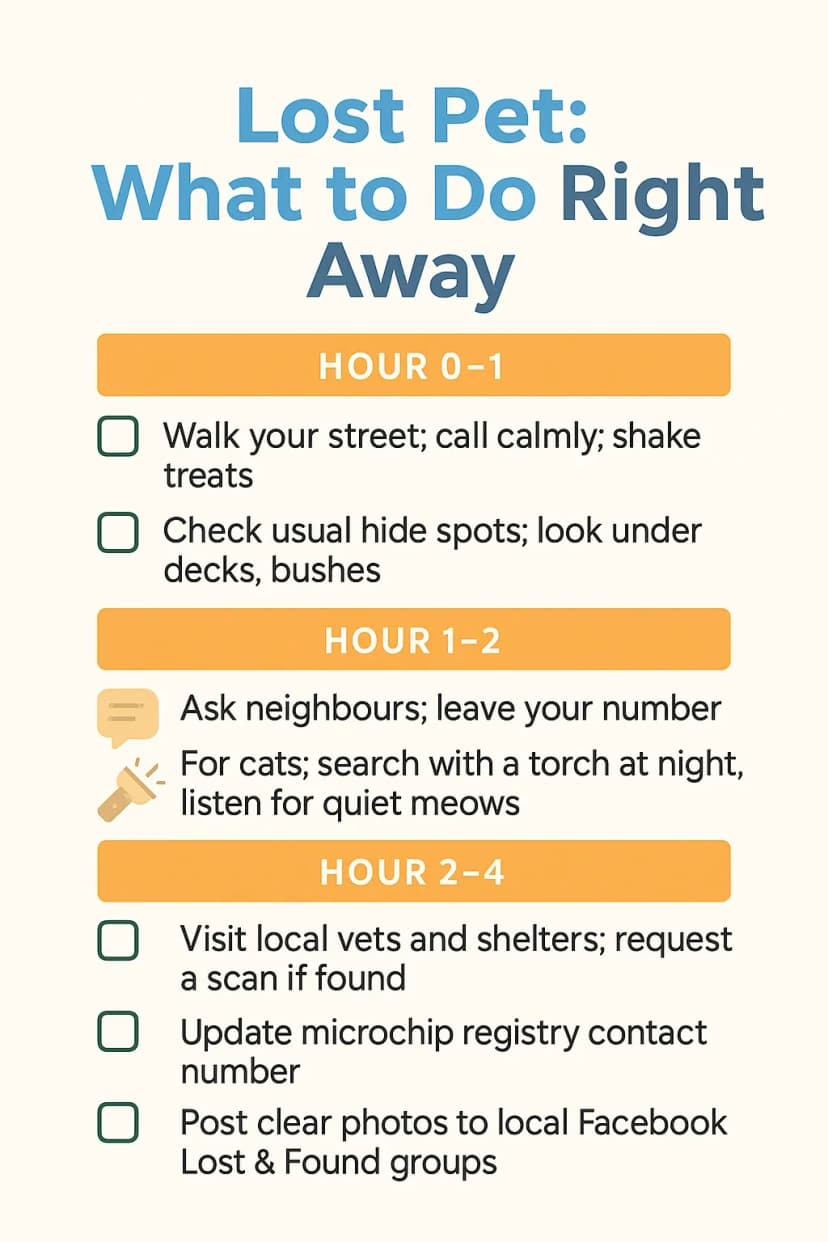
Walk nearby streets first — most pets are found within a kilometre of home.
Notify local vets and shelters right away, post photos to Facebook community pages, and register the loss on PetRescue and your state’s microchip registry. Leave familiar scent items like bedding or food outside. For cats, search at night using a quiet voice and a torch.
If You Find a Lost Pet
If you come across a wandering dog or cat, check for visible ID tags first — you might reach the owner immediately.
If there’s no tag, visit the nearest vet or council pound, where staff can scan the microchip and contact the registered owner.
If it’s hot or the pet looks tired, offer a small bowl of water; dehydration is common after long walks on warm pavements.
If the animal seems injured, call your local RSPCA or council ranger for safe collection.
When it’s after hours, secure the pet in a shaded area and post a photo with suburb and time found to PetRescue Lost & Found or local Facebook “Lost Pets” groups.
For cats, watch first — many owned cats roam daily — but you can still lodge a “found cat” notice online to alert owners.
Why Each Hour Matters
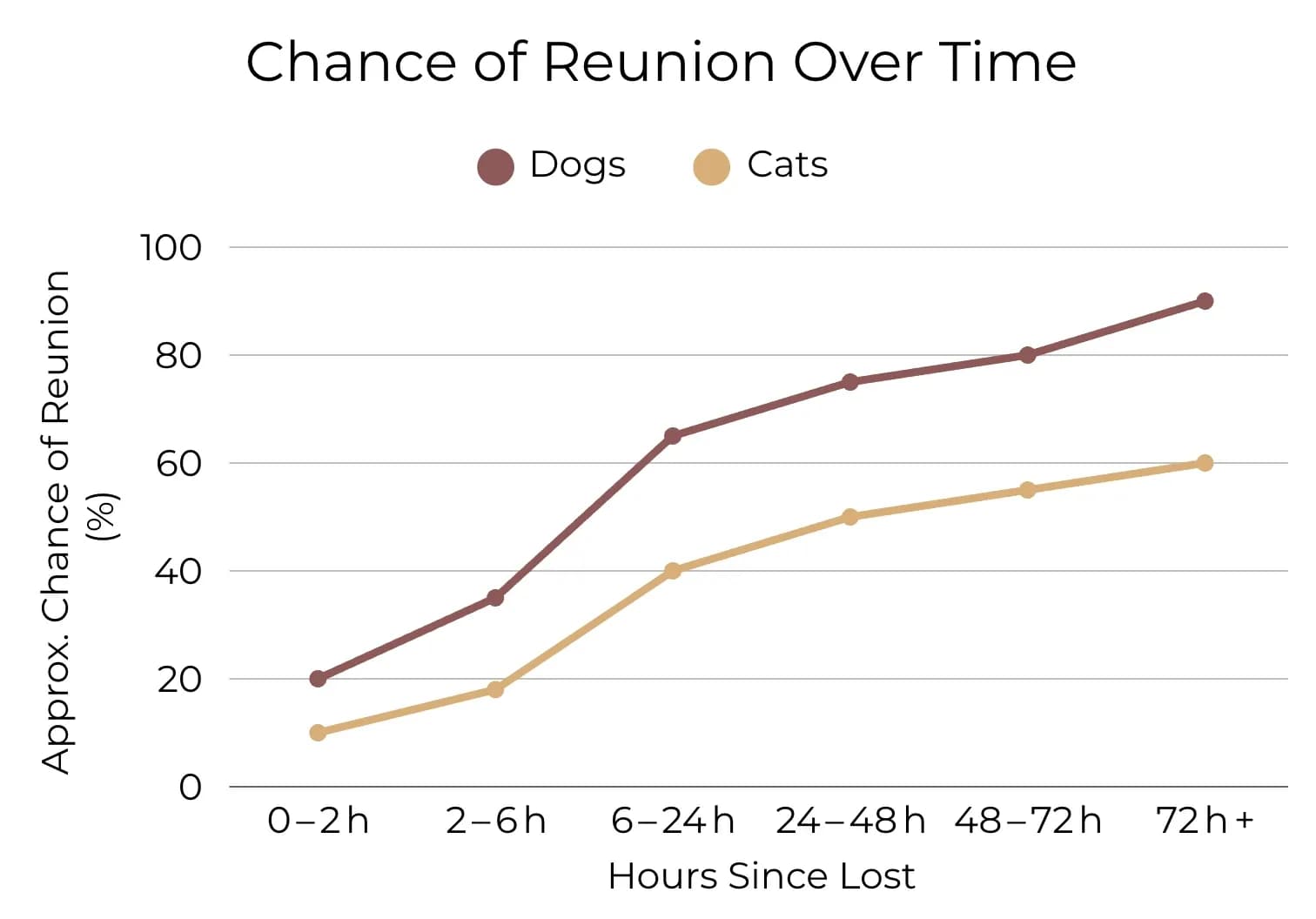
Research published in Animal Welfare Science and council animal management reports shows the likelihood of recovery falls sharply after 24 hours. For dogs, the rate levels by the second day; for cats, by the fifth. Acting quickly — and enabling direct contact through a QR tag or pet GPS tracker — greatly increases success.

The Practical Takeaway
If your pet is already microchipped, you’ve covered the legal base. But adding a smart tag or GPS tracker can turn a multi‑day wait into a same‑day reunion. Many owners layer all three for the best protection.

We tested how well that combination works in real conditions — see the full field results in Pet Tracker Showdown: Smart Tag, 4G GPS, Microchip – Manly Test.